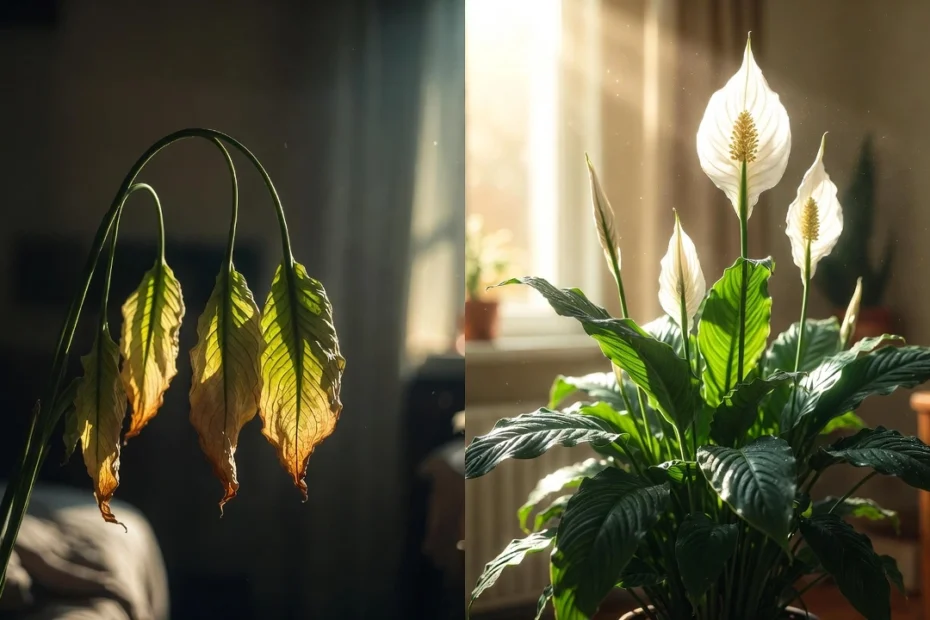
If your peace lily looks tired or slightly droopy in February, don’t worry — this is completely normal. During winter, sunlight becomes weaker, indoor air gets dry, and plant growth naturally slows down.
Because of this, you may notice yellow leaves, brown tips, or drooping stems.
But here’s the good news: you don’t need to do anything complicated. A few small adjustments can keep your peace lily healthy, glossy, and strong until spring arrives. This simple midwinter reset takes just five minutes and can make a big difference.
Let’s understand exactly what your plant needs this month.
Why February Is a Sensitive Month for Peace Lilies
February is still winter in many places. Your peace lily plant goes into a resting phase. It is not actively growing, and it does not need as much water or nutrients as it does in summer.
Common winter problems include:
- Overwatering
- Dry indoor air
- Cold drafts
- Low light
Making small changes now will help your plant bounce back beautifully in spring.
1. Ease Up on Watering
The biggest mistake people make in winter is watering too often.
During warmer months, peace lilies drink water quickly. But in February, the soil stays wet longer because the plant is not growing much.
Instead of following a fixed watering schedule, do this:
- Put your finger into the top inch of soil.
- If it feels dry, water deeply.
- If it still feels slightly moist, wait a few days.
Keeping the soil slightly dry is safer than keeping it too wet. Overwatering can cause root rot, which is one of the main reasons peace lilies die in winter.
2. Give It Better Light
Peace lilies love bright, indirect sunlight. In February, days are shorter and sunlight is weaker.
If your plant is sitting in a dark corner, move it closer to a window where it can receive filtered natural light. Avoid direct sunlight, as it can burn the leaves.
If your home does not get enough natural light, you can use a grow light for one or two hours a day. Soft LED grow lights work well and keep leaves vibrant without overheating the plant.
The goal is simple: steady, gentle light — not darkness and not harsh sun.
3. Increase Humidity to Prevent Brown Tips
If you see brown tips on your peace lily leaves, dry air is usually the reason.
Winter heating systems remove moisture from indoor air. Since peace lilies are tropical plants, they prefer humidity.
Here are simple ways to increase humidity:
- Group plants together to create a small humid environment.
- Use a small humidifier nearby.
- Place the pot on a pebble tray filled with water (make sure the roots do not sit directly in water).
Even a small boost in humidity can make leaves look fresh and glossy again.
4. Keep Temperatures Stable
Peace lilies do not like sudden temperature changes.
Avoid placing them near:
- Cold windows
- Drafty doors
- Heaters or radiators
- Air conditioners
If leaves droop after a cold night, don’t panic. It is usually a temporary reaction. Once temperatures become stable, your plant will recover.
If the room feels comfortable for you, it is usually comfortable for your plant too.
5. Do Not Fertilize in February
February is not the right time to fertilize your peace lily.
Since the plant is resting, adding fertilizer can cause:
- Salt buildup in soil
- Burnt leaf edges
- Extra stress on roots
Wait until spring when you see new growth. Then you can start feeding with a diluted liquid fertilizer once a month.
Quick February Peace Lily Care Summary
- Water only when the top inch of soil is dry.
- Provide bright, indirect light.
- Increase humidity to avoid brown tips.
- Keep temperatures stable and warm.
- Avoid fertilizing until spring.
Caring for your peace lily in February is not about encouraging fast growth — it is about protecting it during winter.
By adjusting watering, improving light, increasing humidity, keeping temperatures steady, and avoiding fertilizer, you help your plant stay strong and healthy.
These small changes take just a few minutes but can prevent common winter problems. When spring arrives, your peace lily will be ready to grow new leaves and possibly bloom again. A little care now ensures a beautiful, thriving plant later.
FAQs
1. Why is my peace lily drooping in winter?
It may be due to overwatering, low light, or cold drafts. Check soil moisture and move it to a warm, bright spot.
2. How often should I water my peace lily in February?
Water only when the top inch of soil feels dry. This may be every 7–14 days depending on your indoor temperature.
3. Should I fertilize my peace lily during winter?
No. Wait until spring when new growth appears before adding fertilizer.
Related Posts