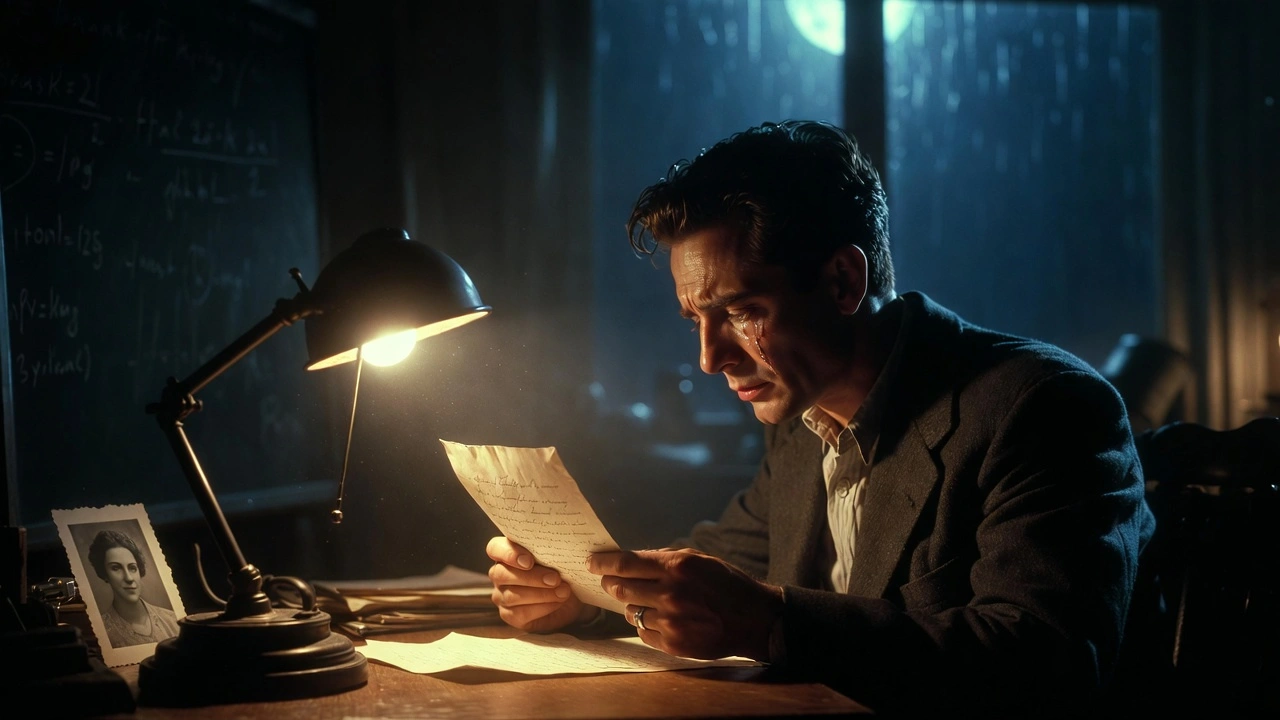
Most love stories end with “happily ever after.” But some love stories continue even after death. One of the most touching examples is the story of Richard Feynman, the Nobel Prize-winning physicist, and his beloved wife Arline Greenbaum.
Feynman was known as a brilliant scientist who could explain difficult ideas in simple ways. He worked on important projects like the Manhattan Project and later won the Nobel Prize in Physics.
People saw him as logical, practical, and deeply connected to science. But behind this great mind was a man who loved deeply and completely.
His private letter to Arline, written after she passed away, shows a side of him that is emotional, honest, and incredibly human.
Who Was Richard Feynman?
Richard Feynman (1918–1988) was one of the most respected physicists of the 20th century.
He became famous for his work in quantum physics and for helping develop the atomic bomb during World War II as part of the Manhattan Project. Later, he received the Nobel Prize in Physics for his contributions to science.
But long before he became world-famous, he was just a young boy from Far Rockaway, New York, who fell deeply in love.
Young Love: Richard and Arline
As a teenager, Richard met a bright and beautiful girl named Arline Greenbaum. She loved art and philosophy, while Richard loved science and mathematics. They were very different, yet they completed each other perfectly.
By his junior year in high school, Richard proposed to Arline. She happily accepted. They believed they had a lifetime of happiness ahead.
But life changed suddenly when Arline began suffering from mysterious health problems.
The Illness That Changed Everything
Arline experienced high fevers and strange swelling in her neck. Doctors were confused at first. Finally, in 1941, she was diagnosed with tuberculosis (TB).
At that time, tuberculosis was extremely serious. Antibiotics were not widely available yet, and many people did not survive the disease.
Here is a simple timeline of major events:
| Year | Event |
|---|---|
| 1941 | Arline diagnosed with tuberculosis |
| 1942 | Richard and Arline got married |
| 1945 | Arline passed away |
Even after knowing how dangerous the illness was, Richard chose to stay by her side. Many people advised him not to marry her. Some worried about his future career. Others feared for his health. But Richard believed in true love more than anything else.
Marriage Against All Odds
At that time, Richard was studying for his Ph.D. at Princeton University. The university even warned that marriage could affect his academic progress. Still, he did not change his decision.
On June 29, 1942, Richard and Arline got married in a simple ceremony on Staten Island. There was no big celebration. Only two strangers served as witnesses.
After the wedding, Arline had to stay in a hospital because of her illness. Meanwhile, Richard joined the Manhattan Project in Los Alamos during World War II. Despite his demanding work, he continued writing loving letters to Arline. In almost every letter, he reminded her: “I love you.”
Honesty in Difficult Times
One of the strongest parts of their relationship was honesty. At first, doctors did not tell Arline how serious her condition was. Richard struggled with whether to hide the truth from her.
Finally, when she discovered the reality, he gave her a “goodbye letter” he had written earlier. Instead of walking away, he asked her to marry him anyway.
This shows how deeply they trusted each other.
The Final Goodbye
On June 16, 1945, Arline passed away at the young age of 25. Richard was only 27.
He calmly arranged her cremation and wrote in her notebook, “June 16 — Death.” For a man trained in science and logic, this was a painful moment beyond explanation.
The Letter Written After Her Death
More than a year after Arline’s death, in October 1946, Richard wrote her a deeply emotional letter. He never mailed it. Decades later, his biographer discovered it among his papers.
In the letter, he wrote that he still adored her and always would. He admitted that he did not fully understand how he could still love someone who was no longer alive. Yet his feelings were real and strong.
He even added humor at the end, writing that he could not mail the letter because he did not know her “new address.”
This small joke shows how he used humor to deal with grief.
Why This Story Still Matters
The story of Richard Feynman and Arline Greenbaum teaches powerful lessons:
- Love Is Stronger Than Fear – Even when faced with illness and death, Richard chose love.
- Honesty Builds Deep Relationships – Their promise to always tell the truth made their bond stronger.
- Even Geniuses Feel Deeply – Behind every scientific mind is a human heart capable of great emotion.
This story reminds us that science explains many things—but not everything. Some feelings, like love, cannot be measured by formulas.
The love story of Richard Feynman and Arline Greenbaum is heartbreaking yet inspiring. It shows that even one of the greatest scientific minds of the 20th century experienced deep emotional pain and lasting love.
Feynman believed strongly in logic and evidence, yet his letter proves that love goes beyond reason. Even after Arline’s death, his feelings remained alive and powerful.
Their story reminds us that success, intelligence, and fame mean little without love and human connection. In the end, the greatest force in life may not be science—it may be love that continues even after life itself.
FAQs
1. Why did Richard Feynman write a letter after Arline’s death?
He wrote the letter to express his continuing love and emotions. It helped him deal with grief and loss.
2. What disease did Arline suffer from?
Arline suffered from tuberculosis, which was very dangerous in the 1940s due to limited medical treatment.
3. Did Richard Feynman ever move on?
Yes, he later remarried, but Arline remained a very important part of his life and memories.
Related Posts