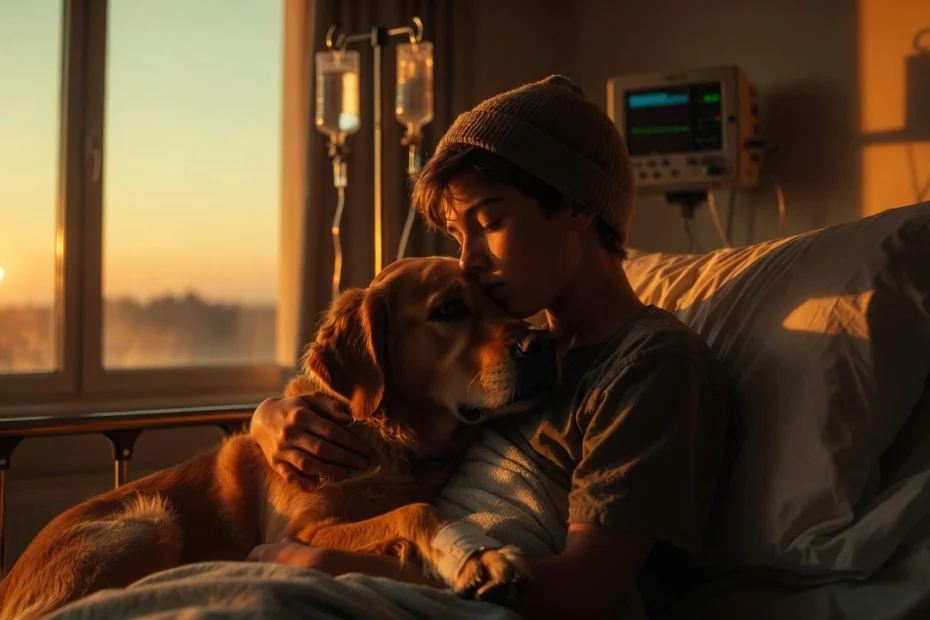
Sometimes, healing does not come only from medicines and doctors. Sometimes, it comes from friendship.
This is the powerful and emotional story of a teenage boy and a therapy dog who both faced cancer at the same time. Their unexpected bond helped them stay strong during one of the toughest battles of their lives.
A Teenage Life Changed Overnight
At just 13 years old, Truman Caudill started feeling extremely tired. He struggled during football practice, found it difficult to climb stairs, and often fell asleep in class. At first, his family thought it was just normal teenage tiredness or maybe a mild illness.
But blood tests revealed something serious. Doctors diagnosed him with acute myeloid leukemia (AML), a fast-growing type of blood cancer that starts in the bone marrow.
Within hours, Truman was admitted to a children’s hospital. One day he was worrying about homework. The next day, he was hearing words like chemotherapy, survival rates, and infection risk. His world changed instantly.
The Arrival Of A Therapy Dog Named Hogan
The morning after Truman was admitted, a hospital volunteer asked him if he would like a visit from a therapy dog. He agreed, not knowing how much that decision would matter.
In walked Hogan, a 10-year-old Golden Retriever with gentle eyes and a calm personality. Hogan had been visiting patients for years, offering comfort without saying a word.
He carefully climbed onto Truman’s hospital bed, turned around slowly, and lay down beside him. Within minutes, Hogan was softly snoring. For the first time since his diagnosis, Truman laughed.
That small, simple moment made the hospital room feel less scary.
Five Months Of Chemotherapy And Dog Visits
Truman began intensive chemotherapy, which is a strong treatment that attacks cancer cells but also affects healthy cells.
During these months:
- He lost his hair.
- He felt weak and nauseous.
- He stayed isolated to avoid infections.
- He missed school and friends.
Hospital life became repetitive and exhausting. But Hogan’s regular visits broke that routine.
- Sometimes Truman brushed Hogan’s fur.
- Sometimes he just rested his hand on the dog’s back.
- On hard days, Hogan quietly lay beside him, providing warmth and calmness.
These visits gave Truman emotional strength when he needed it most.
A Shocking Twist: The Dog Gets Cancer Too
Halfway through Truman’s treatment, Hogan’s owner received difficult news. The therapy dog had developed cancer as well.
Now both of them were fighting the same battle.
The hospital team discussed whether Hogan should continue visiting. In the end, they chose honesty. Truman was told about Hogan’s illness.
Instead of making him more upset, it made their connection stronger. Truman said it felt like they were going through something similar together.
Hogan’s visits became slower and less frequent, but the bond remained strong.
Two Parallel Battles Against Cancer
Both Truman and Hogan were receiving treatment at the same time.
Truman was undergoing intensive chemotherapy in the hospital.
Hogan was receiving cancer treatment from veterinary doctors.
Truman stayed in isolation to avoid infections.
Hogan reduced hospital visits to save his strength.
Truman was supported by doctors and his family.
Hogan was supported by his handler and veterinary team.
Both had days when they refused food. Both had caregivers anxiously waiting for updates. And both showed courage in their own ways.
Remission Brings Hope
After months of treatment, doctors began using the word remission for Truman. This means that the signs of cancer were greatly reduced or not visible in medical tests.
Around the same time, Hogan’s medical scans also showed improvement.
Both the boy and the dog reached remission almost together.
For the hospital staff and their families, it felt like a shared victory. Truman had another chance at life. Hogan could continue spreading comfort to other patients.
How Therapy Dogs Help In Hospitals
The connection between Truman and Hogan may sound unique, but animal-assisted therapy is widely used in hospitals.
Studies show that therapy dogs can:
- Reduce anxiety
- Lower stress levels
- Improve mood
- Help children cooperate during medical procedures
- Provide emotional comfort during long treatments
Therapy dogs do not replace medical care. But they make difficult treatments like chemotherapy easier to handle emotionally.
What Remission Really Means
The word remission does not always mean the cancer is completely cured. It means the signs and symptoms are reduced or not detected in tests.
Patients still need:
- Regular check-ups
- Follow-up tests
- Ongoing monitoring
Even during remission, families stay cautious but hopeful.
Lessons For Families Facing Serious Illness
This story teaches some important lessons:
- Ask hospitals about therapy dog programs.
- Build small daily routines to create comfort.
- Allow children to care for something, even a pet.
- Talk honestly in simple ways about illness.
Emotional support is just as important as physical treatment.
The story of Truman and Hogan shows that healing is not only about medicines and machines. It is also about connection, love, and emotional strength. A 13-year-old boy fighting acute myeloid leukemia found courage in the quiet presence of a Golden Retriever who was battling cancer too.
Their journey reminds us that even during the hardest hospital days, hope can appear in unexpected ways. Animal-assisted therapy, friendship, and compassion can give patients the strength to keep going. Sometimes, the best support does not speak — it simply sits beside you.
FAQs
1. What is acute myeloid leukemia?
Acute myeloid leukemia (AML) is a fast-growing blood cancer that starts in the bone marrow and requires immediate treatment.
2. What does remission mean in cancer?
Remission means the signs of cancer are reduced or not detectable in tests, but doctors continue monitoring the patient.
3. How do therapy dogs help hospital patients?
Therapy dogs reduce anxiety, provide comfort, and help patients feel calmer during stressful treatments like chemotherapy.
Related Posts